Author: Neubauer Lab

  • Ready for Recycling!

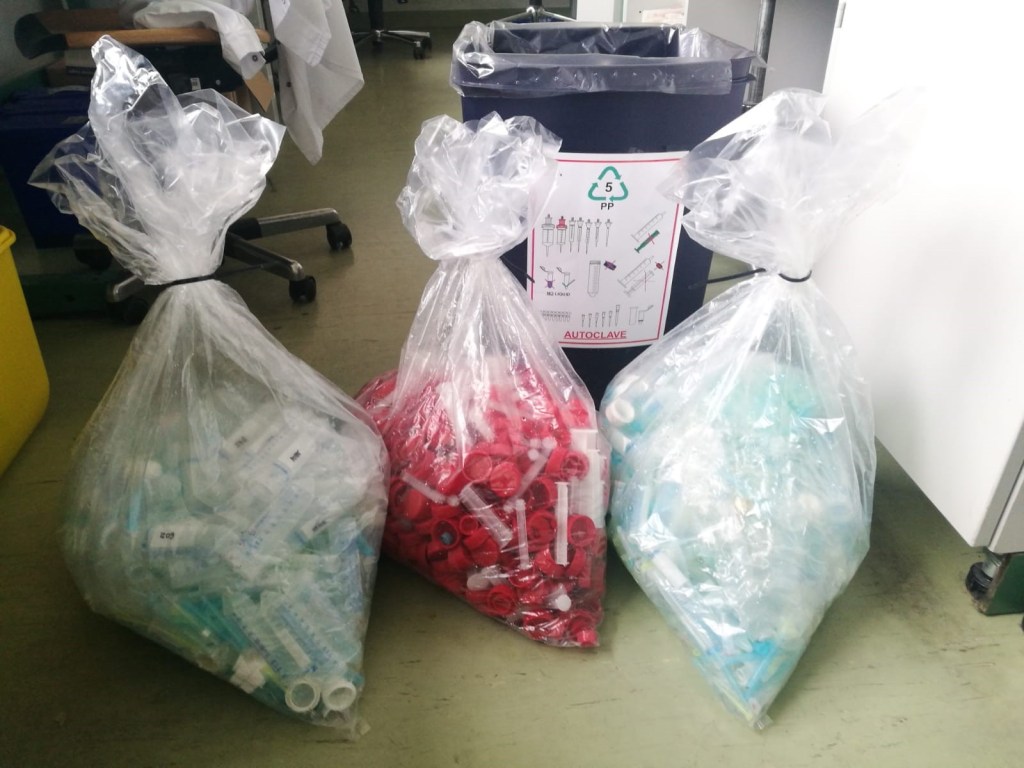
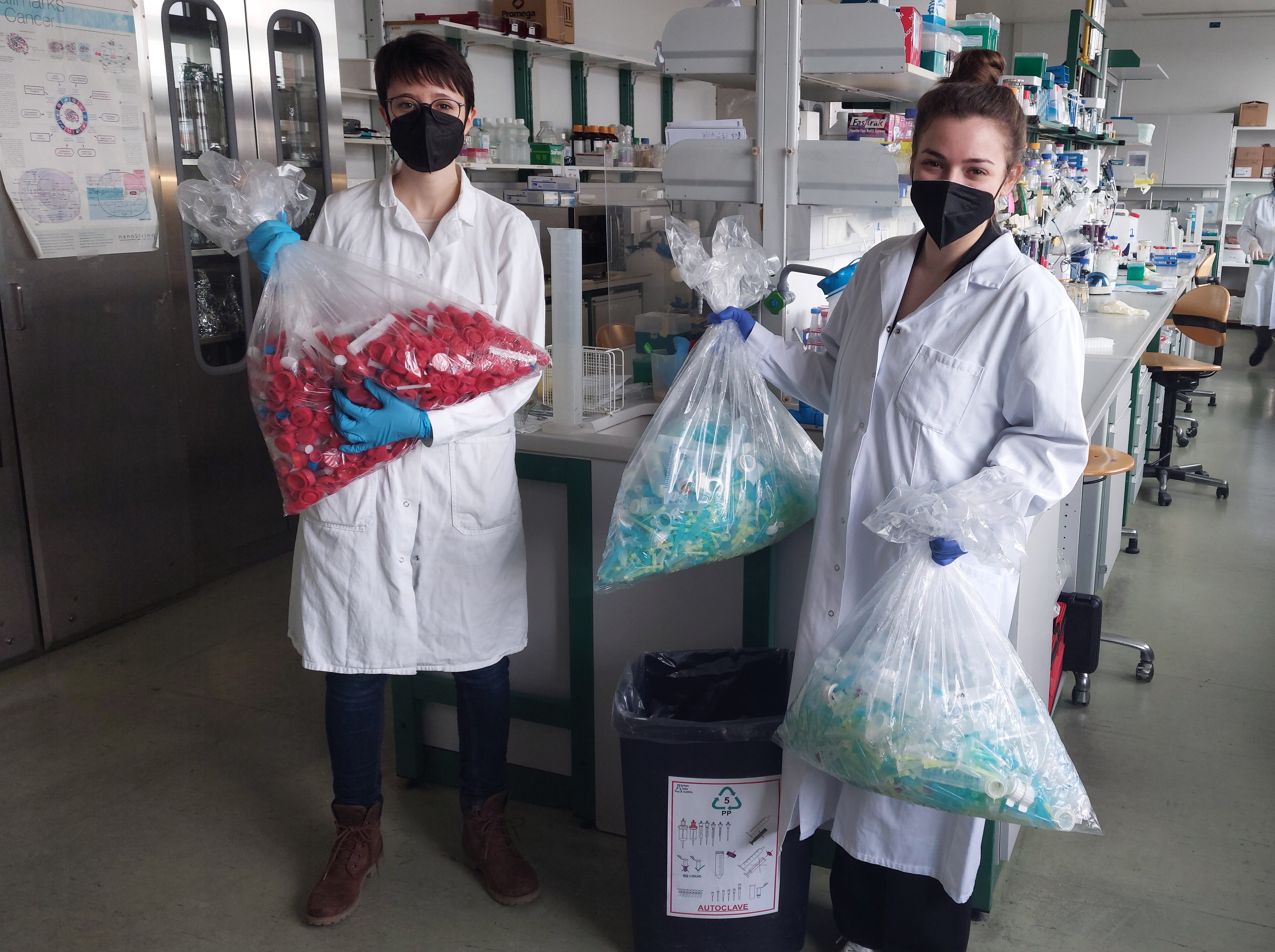
    Implementing a recycling system in a big lab is not easy! Marie and Gabriela have discovered this by now. However, despite all the logistical difficulties and confused lab members and with some help from Greenlabs Austria, they came up with an easy solution for us to sort plastic waste and to prepare it for collection by Stöpselsammeln.

    We are happy that our friends from the Grebien lab joined the Green Labs initiative as well. Together, we can minimize transportation efforts, hand over the to-be-recycled plastic in one go and recycle even more.

  • The Moriggl Lab Joins “Green Labs Austria”

    We are happy to announce that we are now part of the Green Labs Austria in order to reduce our ecological footprint on as many levels as possible. Green Labs Austria is an organization that connects laboratories in Austria to raise awareness for how our research activities contribute significantly to waste problems and climate change. Additionally, they offer guidelines and help for a transition to more environmentally friendly research.

    Our first main aim is to recycle single-use plastic routinely used in our lab as well as to lower our energy consumption. Together we found a way to identify and separate different kinds of plastic in our materials in order to collect them separately for recycling.

    “Self-interest is for the past, common interest is for the future. It is up to us to contribute to urgently needed changes to create a healthier, greener and cleaner planet which will benefit all of us.” – Gabriela, Master student in the Moriggl Lab

    A big shout out to Gabriela and Marie from our lab who contacted the organization and developed a recycling concept that we can all stick to!

    Read more about the Green Labs Austria here. What an amazing initiative!
  • New paper published in “Cancers”: Efficacy and Synergy of Small Molecule Inhibitors Targeting FLT3-ITD+ Acute Myeloid Leukemia

    Two is better than one: Small molecule inhibitors work in synergy to kill resistance-prone FLT3-ITD+ subtype of acute myeloid leukemia.

    The study “Efficacy and Synergy of Small Molecule Inhibitors Targeting FLT3-ITD+ Acute Myeloid Leukemia” was led by Anna Orlova and profited from collaborative efforts with the Medical University of Vienna and the University of Toronto Mississauga. We could contribute to AML research by proposing both new therapeutic options and a novel approach for future treatment:

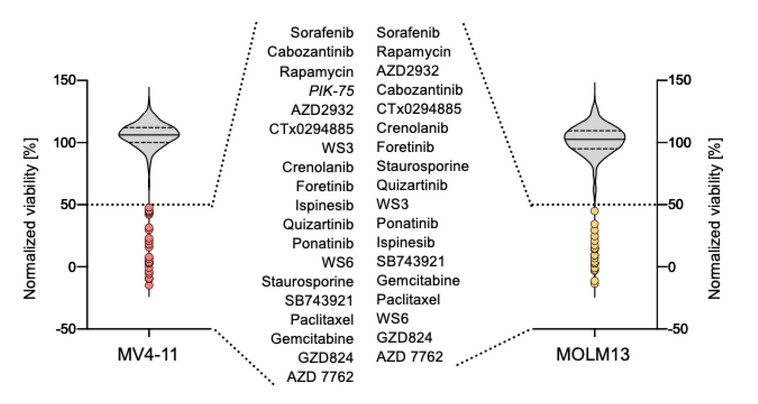
    • The two compounds WS6 and ispinesib, which were previously not considered for AML treatment, were identified to be highly effective against the FLT3 mutated subtype of AML. 
    • The small molecule inhibitor WS6 demonstrated even stronger efficacy towards cancer cells than the approved FLT3 targeting drugs and was proposed to be a potent tyrosine kinase inhibitor.
    • Ispinesib, which targets all dividing cells, was shown to synergize with cabozantinib when cancer cells and patient samples were treated with both compounds combined. This means that they support each other by targeting distinct pathways in the cell and by this, cells cannot easily escape the treatment and the drugs can be applied in lower doses, which minimizes the side effects in patients. 
    Kinase-focused drug screen to find alternative therapeutics for FLT3-ITD+ AML

    Altogether, these insights introduce new therapy options, which could be more effective but less harmful for AML patients.

    We thank all the collaborators that contributed to this study, especially the Vetmeduni Vienna and colleagues and friends from the Meduni Vienna and the University of Toronto Mississauga.

    Link to the paper, published in Cancers.

    Link to the article on our Vetmed Homepage.

  • Review discussing the interesting roles of gd T Cells in cancer published in “Cancers”

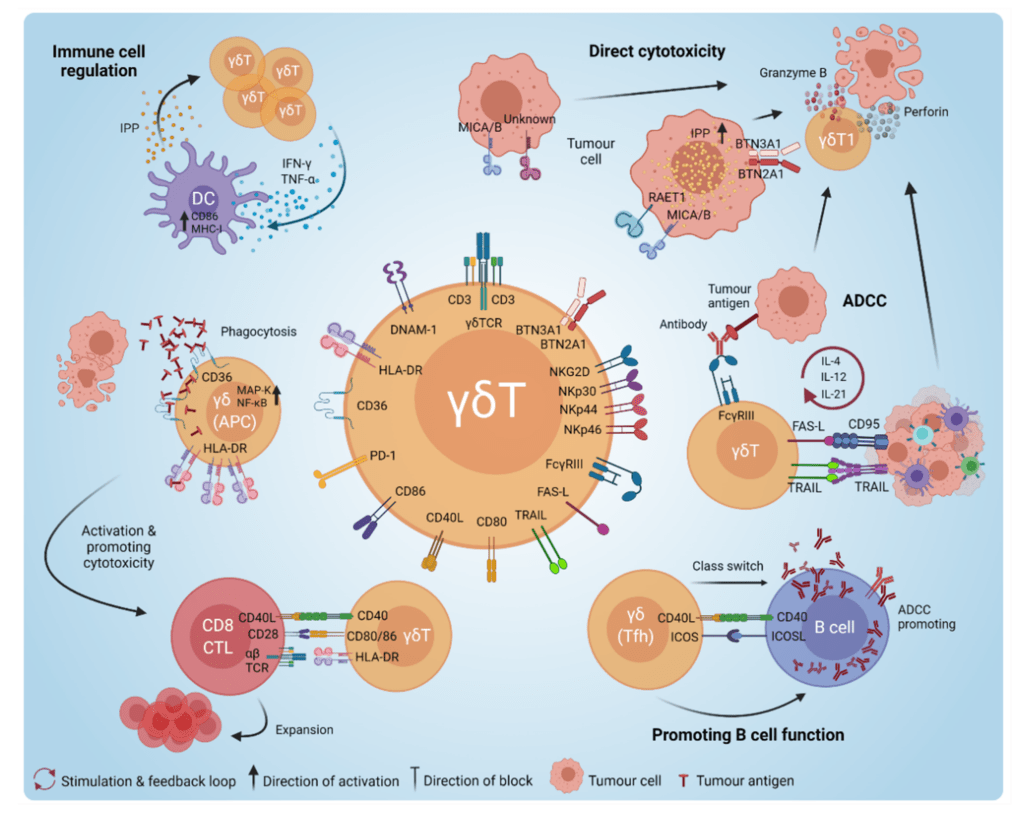
    The Diverse Roles of γδ T Cells in Cancer: From Rapid Immunity to Aggressive Lymphoma

    Anti-tumour functions of γδ T cells

    γδ T cells play important roles in cancer immunity. Their rapid activation and cytotoxic nature make them promising candidates for use in cell-based immunotherapies; however, under certain conditions, they can induce pro-tumour functions. Furthermore, upon transformation, γδ T cells can develop into aggressive lymphomas with a poor prognosis and no curative therapeutic options.

    In this review, a comprehensive summary of our current knowledge on the complex roles of γδ T cells in cancer is provided. Authors from the Neubauer group in our Moriggl lab discuss their anti- and pro-tumour functions in both solid and blood cancers, highlighting the key subsets involved and their potential utility in anti-cancer immunotherapy. Also discussed is the mechanisms of γδ T-cell transformation, summarising the resulting γδ T-cell leukaemia/lymphoma entities and their genetic and molecular profiles, as well as current and future treatment strategies.

    Pro-tumour functions of γδ T cells

    Access the paper here.

    Congrats to all the authors!

  • Heidi Neubauer and Richard Moriggl join the ERAPerMed JAKSTAT-TARGET and the ERANET-PLL consortia meeting in Lyon

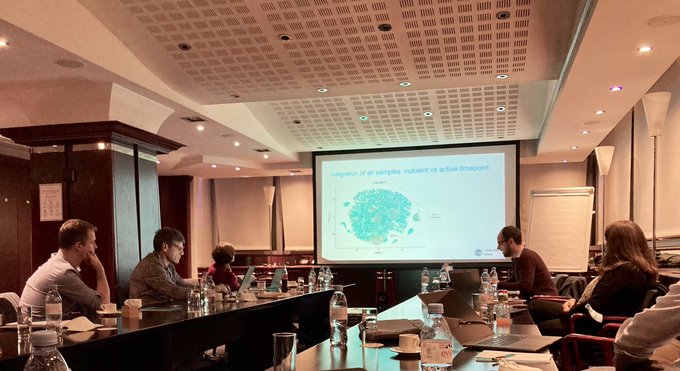
    Productive presentations at the consortia-meeting in Lyon.

    The joint consortia meeting in Lyon/France between the ERAPerMed JAKSTAT-TARGET and the ERANET-PLL consortium (November 18 – 20, 2021) was the first in person meeting for all members since 2019. Most PIs could attend and the meeting resulted in very productive discussions and strengthened our collaborative efforts.

    Thanks to all attending colleagues for this inspiring time in this beautiful city.

    For more information on our international EU projects, please visit our consortium websites.

    Dr. Patrick Gunning, Dr. Heidi Neubauer and Dr. Elvin de Araujo in Lyon