Category: Publications

  • New paper published in “Cancers”: Efficacy and Synergy of Small Molecule Inhibitors Targeting FLT3-ITD+ Acute Myeloid Leukemia

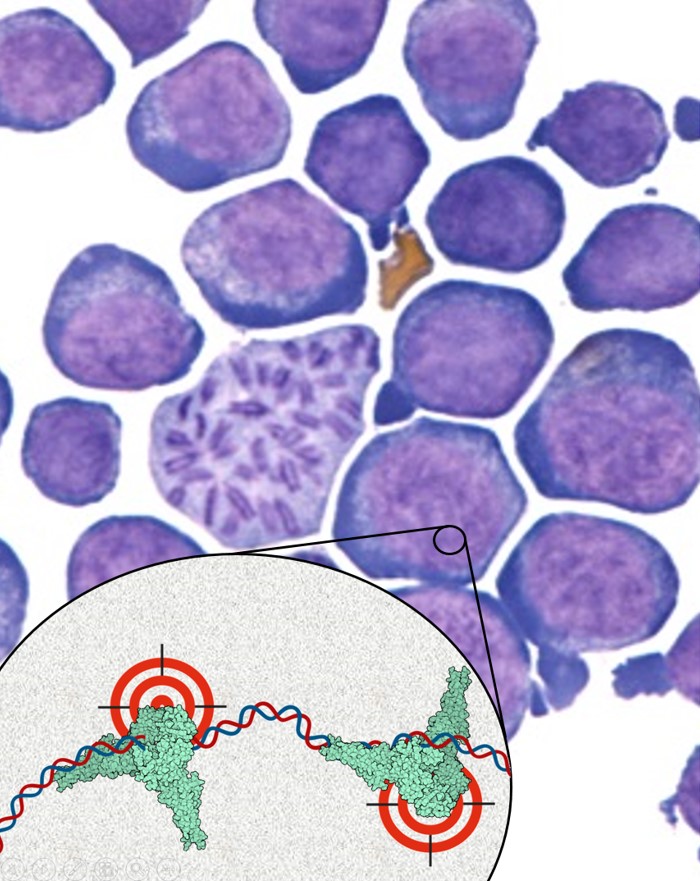
    Two is better than one: Small molecule inhibitors work in synergy to kill resistance-prone FLT3-ITD+ subtype of acute myeloid leukemia.

    The study “Efficacy and Synergy of Small Molecule Inhibitors Targeting FLT3-ITD+ Acute Myeloid Leukemia” was led by Anna Orlova and profited from collaborative efforts with the Medical University of Vienna and the University of Toronto Mississauga. We could contribute to AML research by proposing both new therapeutic options and a novel approach for future treatment:

    • The two compounds WS6 and ispinesib, which were previously not considered for AML treatment, were identified to be highly effective against the FLT3 mutated subtype of AML. 
    • The small molecule inhibitor WS6 demonstrated even stronger efficacy towards cancer cells than the approved FLT3 targeting drugs and was proposed to be a potent tyrosine kinase inhibitor.
    • Ispinesib, which targets all dividing cells, was shown to synergize with cabozantinib when cancer cells and patient samples were treated with both compounds combined. This means that they support each other by targeting distinct pathways in the cell and by this, cells cannot easily escape the treatment and the drugs can be applied in lower doses, which minimizes the side effects in patients. 
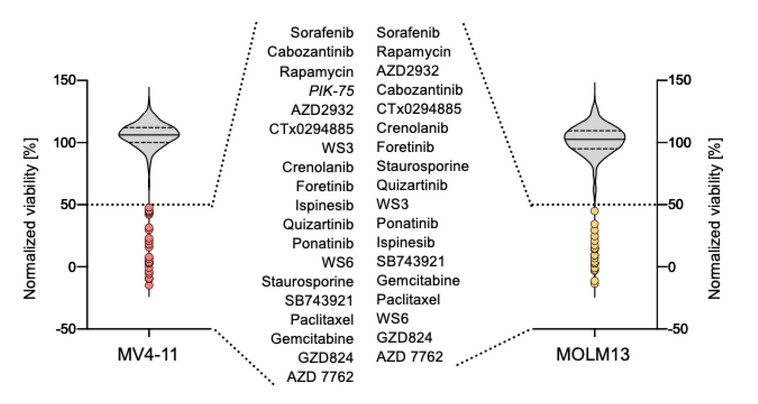
    Kinase-focused drug screen to find alternative therapeutics for FLT3-ITD+ AML

    Altogether, these insights introduce new therapy options, which could be more effective but less harmful for AML patients.

    We thank all the collaborators that contributed to this study, especially the Vetmeduni Vienna and colleagues and friends from the Meduni Vienna and the University of Toronto Mississauga.
    Link to the paper, published in Cancers.

    Link to the article on our Vetmed Homepage.

  • Review discussing the interesting roles of gd T Cells in cancer published in “Cancers”

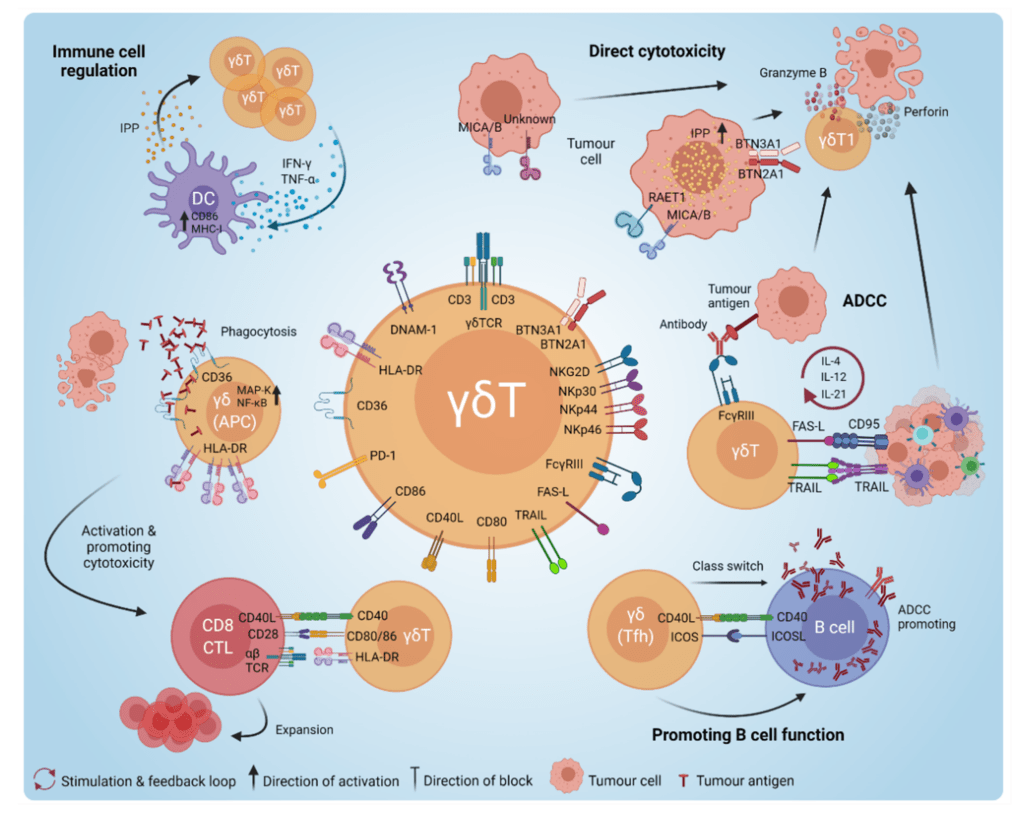
    The Diverse Roles of γδ T Cells in Cancer: From Rapid Immunity to Aggressive Lymphoma

    Anti-tumour functions of γδ T cells

    γδ T cells play important roles in cancer immunity. Their rapid activation and cytotoxic nature make them promising candidates for use in cell-based immunotherapies; however, under certain conditions, they can induce pro-tumour functions. Furthermore, upon transformation, γδ T cells can develop into aggressive lymphomas with a poor prognosis and no curative therapeutic options.

    In this review, a comprehensive summary of our current knowledge on the complex roles of γδ T cells in cancer is provided. Authors from the Neubauer group in our Moriggl lab discuss their anti- and pro-tumour functions in both solid and blood cancers, highlighting the key subsets involved and their potential utility in anti-cancer immunotherapy. Also discussed is the mechanisms of γδ T-cell transformation, summarising the resulting γδ T-cell leukaemia/lymphoma entities and their genetic and molecular profiles, as well as current and future treatment strategies.

    Pro-tumour functions of γδ T cells

    Access the paper here.

    Congrats to all the authors!

  • Article in “NUTRITION-News”

    STAT5 Transkriptionsfaktoren im braunen Fett: „Schalter“ gegen Übergewicht?

    After publishing their paper in “Molecular Metabolism”, Katrin Spirk and Doris Kaltenecker accomplished to publish their research success once more in the German magazine “Nutrition News”.

    Read the article

    While Katrin is doing her PhD here with us in the Moriggl lab, Doris Kaltenecker is currently doing a Post Doc in the group of Prof. Dr. Stephan Herzig at the German Research Center for Environmental Health (Helmholtz Zentrum München) in Munich.

  • Special “Cancers” issue: Targeting STAT3 and STAT5 in cancer

    Special “Cancers” issue: Targeting STAT3 and STAT5 in cancer

    The Special Issue “Targeting STAT3 and STAT5 in Cancer”, edited by Prof. Dr. Richard Moriggl, Prof. Dr. Patrick Gunning and Prof. Dr. György Miklós Keserü was published with 26 papers in Cancers (peer-reviewed Open Access journal of oncology published monthly online by MDPI). Read the full text of the papers at the following link:

    Special Issue “Targeting STAT3 and STAT5 in Cancer”

  • Paper published in Molecular Metabolism

    Our group successfully published a paper on STAT5 signaling in lipid metabolism in the journal “Molecular Metabolism”.

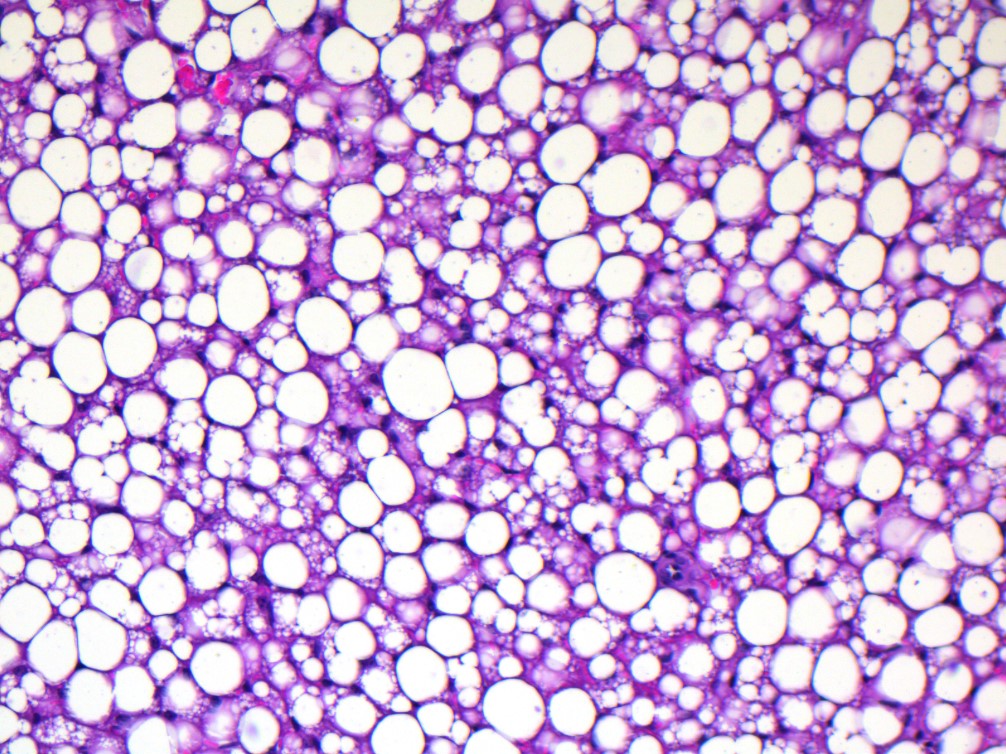
    Doris Kaltenecker and Katrin Spirk were working together on this project and investigated the function of STAT5 in brown adipose tissue thermogenesis, as well as its role in the brown remodelling of white adipose tissue. They demonstrate in their work the importance of STAT5 for the functionality and the β-adrenergic responsiveness of thermogenic adipose tissue.

    STAT5 is required for lipid breakdown and beta-adrenergic responsiveness of brown adipose tissue.
    Kaltenecker D, Spirk K, Ruge F, Grebien F, Herling M, Rupprecht A, Kenner L, Pohl EE, Mueller KM, Moriggl R. Mol Metab. 2020 May 27:101026. doi: 10.1016/j.molmet. 2020. 101026. Online ahead of print. PMID: 32473405

    Congratulations Doris and Katrin!